
Ari Emanuel. Photograph by Brigitte Lacombe.
Is good luck just good timing?
Contrarian deals are often made after years of honing one’s intuition. A decade ago, when Ari Emanuel placed $4.1 billion “chips on the table” to buy the Ultimate Fighting Championship (UFC), he believed it was an undervalued property and that all live sports would eventually migrate from networks to streaming giants. The insight was prescient. Today TKO Group Holdings—which consolidated UFC with World Wrestling Entertainment (WWE) in 2023—has a market cap north of $35 billion. Still, he calls the initial wager “the scariest moment of my career.”
Emanuel is the rare talent agent who understood that acquiring global media rights would put him in the same conversation with Hollywood’s tippy-top power brokers. A superagent who became famous as a fictional character on HBO’s “Entourage”—Ari Gold, his foul-mouthed alter ego—he initially worked his way up from the mailroom at CAA, later moving to ICM where he led a mutinous exit with three fellow agents. Together, they launched the upstart Endeavor agency in 1995.
Once Endeavor merged with William Morris in 2009 to form WME, it paved the way for expansion with the acquisition of IMG (purchased for a reported $2.4 billion in 2014, with Silver Lake Partners), followed by UFC and WWE. As executive chair and CEO of TKO, executive chairman of WME Group and a founder and principal investor in MARI, Emanuel’s empire now encompasses sports, entertainment, media, events, hospitality and art.
As he reveals in his raw new memoir, “Roll the Calls,” the dealmaking earned him a reputation for relentless drive, laced with his signature volcanic outbursts. In the book he recalls heated run-ins with Barry Diller, Mike Ovitz, Harvey Weinstein and Jeff Bezos, among others. Though he claims to have mellowed some after years of therapy, his mega-temper still flares if you double-cross or cheap out on a client or a colleague.
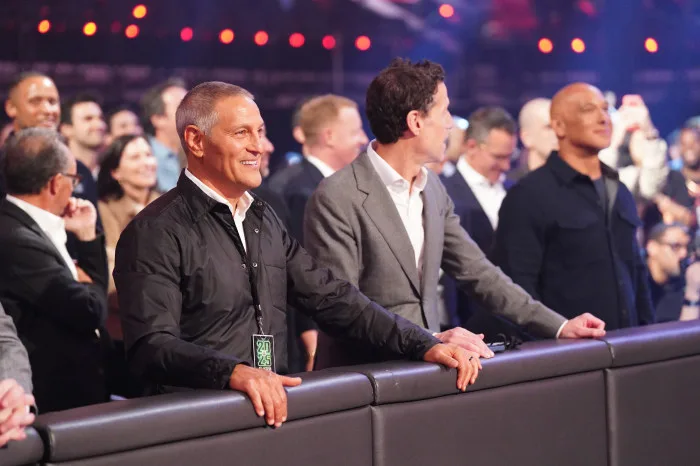
Beyond the hardheaded negotiating, Emanuel says he’s also a great believer in serendipity—and in showing up every day to stay in the fight. “You’ve got to be there,” he writes, “in the room, at the table, sharing air with the person, for serendipity to kick in.”
You’ve said “revenge is a dish best served cold.” Are you still into revenge?
Yeah. Why not?
Some people refer to you as a “ragent.” Why all the anger?
Rage is good. Rage from a place of understanding, rage because you’re passionate and you care and you give a s—.
Do you exhibit deliberate rage?
I was on a call with somebody about a client’s movie. I thought there should be this one ending. This guy got on the phone, he’s questioning the ending. I said to him, “If I want your opinion, I’ll give it to you. Who the f— are you, asshole?” This guy was getting in my way, and I was going to run him over.
In the memoir, you write that in your 20s, when you told CAA chairman Mike Ovitz you were leaving the agency, he said he would ruin you. So you picked up a metal chair.
[Editor’s note: Ovitz disputes this account.]
He was threatening me. I just picked it up. There was an opening. I said, “Are you threatening me? Because he was. I say, “OK, let’s go. I’m ready to go. Who the f— are you? You got the wrong guy.” I’m not scared of Mike Ovitz or any of them.
You also got into fights as a kid, growing up in Wilmette, Illinois. Skills that help you survive childhood can screw you up in adulthood.
Aggression and anger existed in my life because I didn’t understand what happened to me with dyslexia and how I felt about myself. And being nervous that I was going to be discovered as not being smart. That whole need to prove that I am. It’s just this cycle. In my household, getting good grades was an indication of being smart. And if my success was not the way I wanted it, I would get pissed off and be impossible to be around.
Tell me about your mother, who was a civil rights activist. It all starts with the mother.
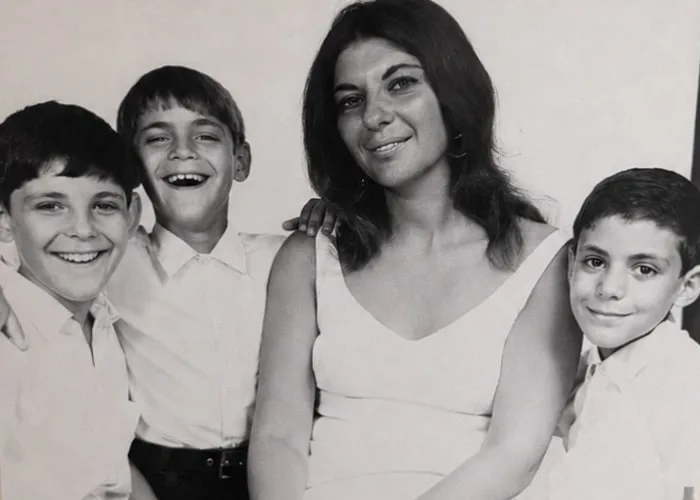
I tell you, my mom went off on some people. She was a beast. Somebody used a racial slur, and my mom came after them. She was an animal in such a beautiful way, because she didn’t put up with s—. I say this all the time. It just seeped into me: a lady willing to take her three boys down to demonstrate, fight in the suburbs.
You sometimes ghost people if they are disloyal to you—the disloyalists, you call them. Patrick Whitesell, for instance, who was married to Lauren Sánchez Bezos before she got together with Jeff Bezos. You were OK with ghosting him?
Well, from my completely subjective point of view, and I know Patrick has his, he was one of the great partners I ever had in my life, for decades. He was like the yin to my yang. He was an incredible agent and incredible leader. Incredible. At the end, you know, and I don’t know when it started, why it started, what happened, and it just seemed that there was an imbalance. My wife and I were friends with Lauren Sanchez. We go on the boat. We came for a client. I didn’t know. I should have called him. My f— up. I didn’t. OK. But it was years after the breakup.
And you’re good with never speaking again?
Oh f— yeah!
Why did you have a hunch that certain live sports were about to go mainstream, first bullfighting, then UFC?
We were a representation business, and we had built all the layers to help sports and live events. I realized we could be a mix of ownership and representation. We knew UFC was becoming available. We had to go for it. There were people inside that were nervous about it.
Tell me about being summoned to a hotel room by Harvey Weinstein not long after you’d started Endeavor. He surprised you by saying he’d arranged for William Morris to buy you out.
You got to remember back then he was the kingmaker. He was horse-trading something. His Lacoste shirt was inside out. There’s food stains. He put out chairs, and he’s saying, “I made a deal for you. You’re gonna make two and a half million dollars. I’m like, “Who the f—? No, I’m not. I don’t roll that way. You think they’re gonna buy me? I’m gonna buy them.” He thought I was crazy.
Why have you publicly endorsed Paramount Skydance’s acquisition of Warner Bros. Discovery? Does the deal benefit you?
I think it does benefit me. That’s great for my clients, a guy willing to spend 30 billion dollars a year—incredible for the business. Creates competition. With the deal happening, you would have a company willing to do 30 movies, 45-day windows in the theaters, 170 TV shows, 30 billion dollars in content spend.
What’s all the opposition about?
In my opinion, it’s because all 13 Democratic attorneys general don’t want Larry Ellison controlling CNN. And as I said in my op-ed and on television, put an editorial board together. I’m cool with that. And it works.
Keep editorials totally separate from the news?
Correct.
If you can’t control a merger, you can control your own life. What does “f— you money” mean today?
I have f— you money. But I’m not sitting there worrying about how high the stack is for the stack’s sake.
You like to buy things with the money.
I love art. I have old cars now because I own Barrett-Jackson. I buy people gifts.
You said you had dollar signs in your eyes when you were young.
I thought that was the definition of success: if I could make a lot of money.
Do you think the game is more fun than the money?
I enjoy the process. I enjoy my own self-competition. “Can you get this done? Are you right about this and how you’re thinking about it and can you build something?”
Why are so many rich people never satisfied that enough is enough?
I think people are looking at social media and looking at other people’s lives and comparing their lives. What’s that phrase? FOMO. I do what I want to do. I don’t need to say, “Why wasn’t I invited?” I don’t give a s—. I think people are looking at their stack, and then they’re looking at that guy’s stack. I don’t look at that guy’s stack. I have a great life.
Has that attitude helped with the anger?
I get angry on occasion. It’s not what it used to be. I was horrible. I was horrible to be around. I didn’t like it.
What do you tell your kids about your rage, now that they’ve presumably read about it?
I said this to my middle son Ezra the other day. “You’ve read my book now. Don’t do what I did. Get past this kind of rage thing and get to the work-really-hard thing.”
This interview has been edited for length and clarity.